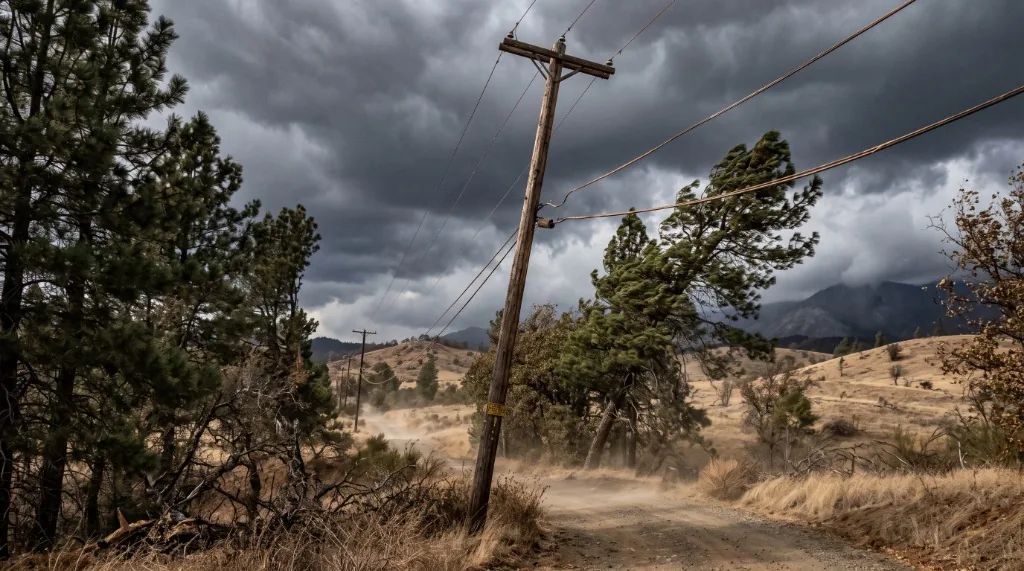
Overcrowded Cells, In-Custody Deaths, and Command Turmoil: Inside Shasta County’s Public Safety Breakdown
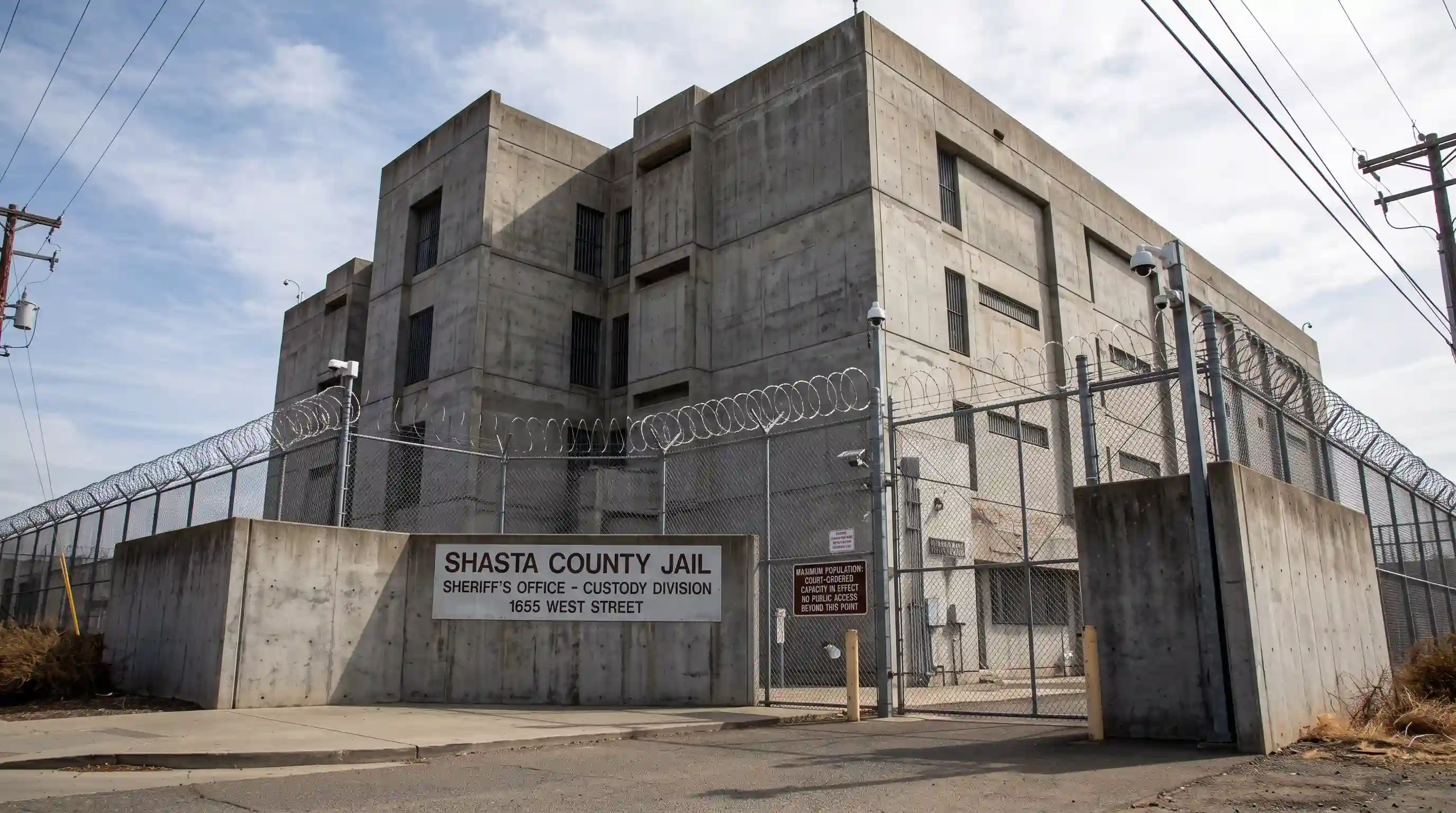
Operating under a 90% court cap with 98.7% felony inmates, the Shasta County Jail drives a revolving-door release cycle as the 90-acre Eastside Road campus plan collapses.
REDDING, California — A 42-year-old concrete fortress at 1655 West Street has become the focal point of a systemic crisis paralyzing local law enforcement across Shasta County.
Operating under a strict court-mandated 90% population cap, the Shasta County Jail is functioning almost entirely as a high-security holding pen for serious felony defendants, leaving virtually no room to hold lower-level offenders. The resulting gridlock has forced local municipal police into a revolving-door cycle of citing and releasing repeat offenders, even as the Redding Police Department undergoes executive upheaval following the sudden sidelining of its veteran police chief.
Compounding the crisis, the county’s long-term plan to construct an expansive 90-acre correctional campus along the Sacramento River abruptly collapsed following legal challenges and land-use disputes, leaving the county with no approved blueprint to replace its aging detention infrastructure.
The 90-Percent Ceiling and the West Street Bottleneck
Although the Shasta County Jail was constructed to house 484 inmates—divided into allocations for 404 men and 80 women—the Custody Division is legally prohibited from utilizing all of them. Under a binding judicial release order, the facility cannot exceed 90% of its operational capacity, capping the maximum population at approximately 435 detainees. Over the 2024–2025 operational cycle, the jail processed 7,538 bookings while maintaining an average daily census of 398 inmates, hovering continuously near its legal ceiling.
Statewide criminal justice policies, including Assembly Bill 109 Realignment, have fundamentally altered the inmate population. With capacity releases routinely filtering out lower-level arrestees, the jail’s remaining population is almost entirely composed of individuals detained on high-level felony charges. A single-day facility census conducted on January 31, 2025, revealed that 373 out of 378 housed inmates—98.7% of the total custodial population—were held on felony charges, with just five individuals detained for misdemeanors.
The 2024–2025 Shasta County Grand Jury characterized the resulting environment as a hardening "prison culture" dominated by institutional gang dynamics and narcotics smuggling rings. At the same time, acute behavioral health demands have further diminished effective capacity. Housing pods engineered to hold up to 40 inmates are regularly restricted to as few as seven individuals to accommodate psychiatric instability or mandatory administrative segregation, triggering space deficits even when total headcounts remain below the 90% threshold.
Compounding the physical limitations is a chronic personnel deficit. The Custody Division operates with a 21.5% structural vacancy rate, leaving 20 of its 93 authorized full-time equivalent positions unfilled. According to grand jury findings, the facility has struggled with continuous deputy shortages for more than two decades, forcing continuous mandatory overtime shifts to satisfy California Code of Regulations Title 15 post-coverage mandates. Staffing constraints previously forced the Sheriff's Office to shut down the jail’s entire top floor, taking 80 beds offline before targeted overtime adjustments permitted the floor to reopen.
In-Custody Fatalities and Surveillance Gaps
The strain on personnel and physical space has coincided with an elevated rate of in-custody deaths. Between December 2023 and January 2026, six inmates died within the Shasta County custodial system, prompting scrutiny from civil grand jurors and civil rights attorneys:
Manuel Galindo Diaz, 60: Died September 6, 2024, in Sobering Cell Three from lethal cardiac arrhythmia tied to chronic methamphetamine abuse.
Juan Moreno, 27: Died January 24, 2025, by suicide in a detention housing cell following severe psychiatric distress.
Nathan Arthur Webster, 46: Discovered dead in a general housing cell on September 14, 2025, while held on parole and narcotics violations.
Michael K. Jorgenson, 24: Found dead in Level 2, Housing Unit A, Cell 11 on October 26, 2025.
Jason Scott Driskell, 56: Suffered an in-custody medical emergency before dying after transfer to a regional medical center on October 30, 2025.
Tina Marie Elrite, 53: Died January 6, 2026, inside Sobering Cell Four while awaiting scheduled release on an alcohol intoxication booking.
County public safety metrics show that Shasta County has averaged 3.7 custodial deaths annually across five of the past six reporting cycles—nearly double the per-capita rate of demographically comparable rural counties like Butte and Imperial, and outpacing major metropolitan facilities such as New York City’s Rikers Island.
Grand jury investigations into the fatalities pointed to critical physical and procedural gaps. Three of the deaths occurred in standard detention housing cells and two transpired within intake sobering cells, often in the intervals between mandatory hourly visual checks. Physical assessments revealed severe surveillance blind spots throughout the facility’s wings and a historical absence of cameras inside the primary intake and booking corridor. While the Board of Supervisors authorized a phased electronic security upgrade package slated for completion in 2026, custodial deputies operated through late 2025 without body-worn cameras.
Civil rights advocates and investigative watchdogs have directed legal challenges at Wellpath, the private medical contractor providing healthcare and psychiatric services within the jail. Ongoing federal civil rights litigation under 42 U.S.C. § 1983 contends that baseline Title 15 state standards fail to mandate the 24-hour observation required for inmates enduring acute psychiatric crises or intense chemical withdrawal.
Redding Police Surge Meets the Revolving Door
In Redding, the county’s commercial and population core, municipal police have pursued an aggressive enforcement push that runs directly into the county’s jail capacity limits.
Under strategic updates aimed at downtown business corridors and retail theft, the Redding Police Department logged 96,013 calls for service in 2025 after fielding over 109,000 calls the year prior. While aggregate violent and property crime indices dropped by approximately 21% under National Incident-Based Reporting System metrics, RPD drove a 32% year-over-year surge in misdemeanor arrests through quality-of-life and anti-vagrancy crackdowns.
Because 98.7% of jail beds are occupied by felony defendants, lower-level misdemeanants brought to the West Street sally port are routinely booked and processed for immediate "capacity release" under the court cap. Patrol officers frequently encounter the same offenders back on the streets within hours, driving high recidivism and inflating emergency call volumes. To manage continuous street-level behavioral crises without overwhelming booking cells, RPD relies on its Crisis Intervention Response Team (CIRT), which pairs patrol officers with county health clinicians to divert psychiatric cases away from detention.
This operational tempo unfolded alongside sudden executive upheaval. On December 31, 2025, Redding Police Chief Brian Barner—a 29-year department veteran who had led the agency since 2021—was abruptly placed on administrative leave by the interim city manager pending an unspecified internal investigation. Municipal leadership appointed Captain Brian Cole, commander of the Detective Division, to serve as Acting Chief, leaving the city’s primary police agency under interim command during a critical operational cycle.
The Collapse of the Eastside Road Corrections Campus
To relieve pressure on the main jail, the county spent months advancing an intergovernmental agreement with the City of Redding to lease 90 undeveloped acres along Eastside Road between Highway 273 and the Sacramento River. The plan called for an Alternative Custody Campus featuring a 100-bed reentry facility, day-reporting classrooms, and dedicated space for an eventual replacement jail, secured at a lease rate of $1 per year with an option to purchase for $1.
The project dissolved in mid-2026. Surrounding property owners organized as the River Ranch Neighborhood Association filed a petition for writ of mandate in Shasta County Superior Court, alleging that the county and city violated the California Environmental Quality Act (CEQA) by executing a 30-year lease under a categorical exemption rather than completing a full Environmental Impact Report. Subsequent biological assessments discovered protected vernal pool fairy shrimp habitats across the acreage, which would have required costly drainage and site engineering modifications.
On August 5, 2026, Sheriff Michael Johnson announced at a neighborhood town hall that the Sheriff's Office was withdrawing from the Eastside Road property entirely. On September 15, the Board of Supervisors formally authorized a letter terminating the municipal lease.
The cancellation represented an operational and financial hit. County administrators confirmed that abandoning the parcel forfeits the nearly cost-free 90-acre site, discards tens of thousands of dollars spent on initial engineering studies and outside legal retainers, and delays jail replacement planning by at least 18 months in an inflationary construction climate.
During the termination hearing, Supervisor Matt Plummer moved to establish a multi-agency capital planning committee—bringing together public works, real estate analysts, county counsel, and law enforcement—to prevent future projects from collapsing over foreseeable land-use barriers. Sheriff Johnson pushed back, arguing that law enforcement command must maintain independent control over correctional facility planning. Supervisors Chris Kelstrom, Corkey Harmon, Kevin Crye, and Allen Long voted 4–1 to defeat Plummer's oversight initiative, maintaining the existing planning process.
To manage immediate bed shortfalls, the county has turned to inter-agency bed leases, renting medium-security beds from Del Norte County at $77 per inmate per day and authorizing a $400,000 contract with Solano County through mid-2028. However, inter-county transfers remain precarious; an earlier housing contract with Lassen County collapsed when Lassen faced its own correctional staffing deficits, abruptly returning 22 inmates back to Shasta County's crowded facility.
Mutual Aid Demands Thin Rural Fire Response
The operational strain across Shasta County's justice system extends to its emergency medical and wildland fire infrastructure.
Structural fire suppression and emergency rescue across the county’s unincorporated Local Responsibility Areas are administered by the Shasta County Fire Department (organized under County Service Area No. 1) through a master contract with Cal Fire’s Shasta-Trinity Unit (SHU). The network incorporates 14 career state stations, 10 independent Fire Protection Districts, and 18 to 19 rural volunteer fire companies. Dispatching is managed through the Redding Emergency Command Center (ECC)—which processes over 72,000 phone contacts and 14,500 emergency incidents annually—alongside SHASCOM, which coordinates 9-1-1 calls for municipal police and fire units.
The system faces severe challenges from a declining volunteer firefighter roster. Grand jury findings and local fire management plans confirm that rising mandatory state training hours, physical certifications, and changing rural demographics have eroded volunteer participation in outlying areas like Palo Cedro, Big Bend, and Igo/Ono. Several volunteer stations regularly struggle to muster minimum multi-person engine crews, leaving career Cal Fire engines to absorb local residential and medical emergencies.
This vulnerability intensifies during wildfire season. Under the California Master Mutual Aid Agreement and the California Fire Master Agreement with the U.S. Forest Service, local career engines, specialized dispatchers, and overhead personnel are routinely mobilized to major wildfires across the state.
During severe regional wildfire sieges, the Redding ECC processes upwards of 15,000 out-of-unit resource orders, dispatching personnel and apparatus away from Shasta County for up to 117 consecutive days in a single season. When career crews deploy elsewhere, baseline structural protection and emergency medical calls across the county fall onto an understaffed volunteer roster, stretching response times across rural corridors.
Competing Visions for Reform
Law enforcement leaders and community oversight groups remain divided over how to resolve the county's public safety deficits.
Sheriff Johnson and regional command staff attribute the crisis primarily to Sacramento legislation, pointing to AB 109, Proposition 47, and recent statutory changes that shifted correctional burdens onto county detention centers without providing adequate capital funds to build new cells or secure medical facilities. Sheriff Johnson maintains that because the county lacks the bonding capacity to finance a new multi-million-dollar downtown jail, expanding alternative custody through CDCR-partnered Male Community Reentry Programs represents the only realistic path to ease crowding and lower recidivism.
Leadership also defended sharing release notifications with federal immigration authorities, noting that out of 33 detainer requests submitted by ICE in 2025, information was shared on seven individuals whose serious felony records fell under statutory exemptions in SB 54 (the California Values Act).
Conversely, civil rights advocates, community watchdogs, and legal defense attorneys contend that structural mismanagement, reliance on private healthcare contractors, and a punitive local charging culture drive high incarceration and mortality rates. Oversight advocates emphasize that state-level reviews through the Board of State and Community Corrections remain delayed by administrative backlogs, leaving local taxpayers to bear the financial costs of wrongful death settlements while core practices inside the West Street facility persist unchanged.
With the Eastside Road project abandoned, the West Street jail capped, and emergency services stretched thin, Shasta County’s public safety infrastructure remains in an ongoing operational bind. Finding lasting solutions will require securing an actionable site for alternative custody, filling long-standing correctional and volunteer vacancies, and stabilizing leadership across municipal and county ranks.